
THE INSPIRATION
Systemic Reality
Overcoming Infrastructure Limitations Through Technology
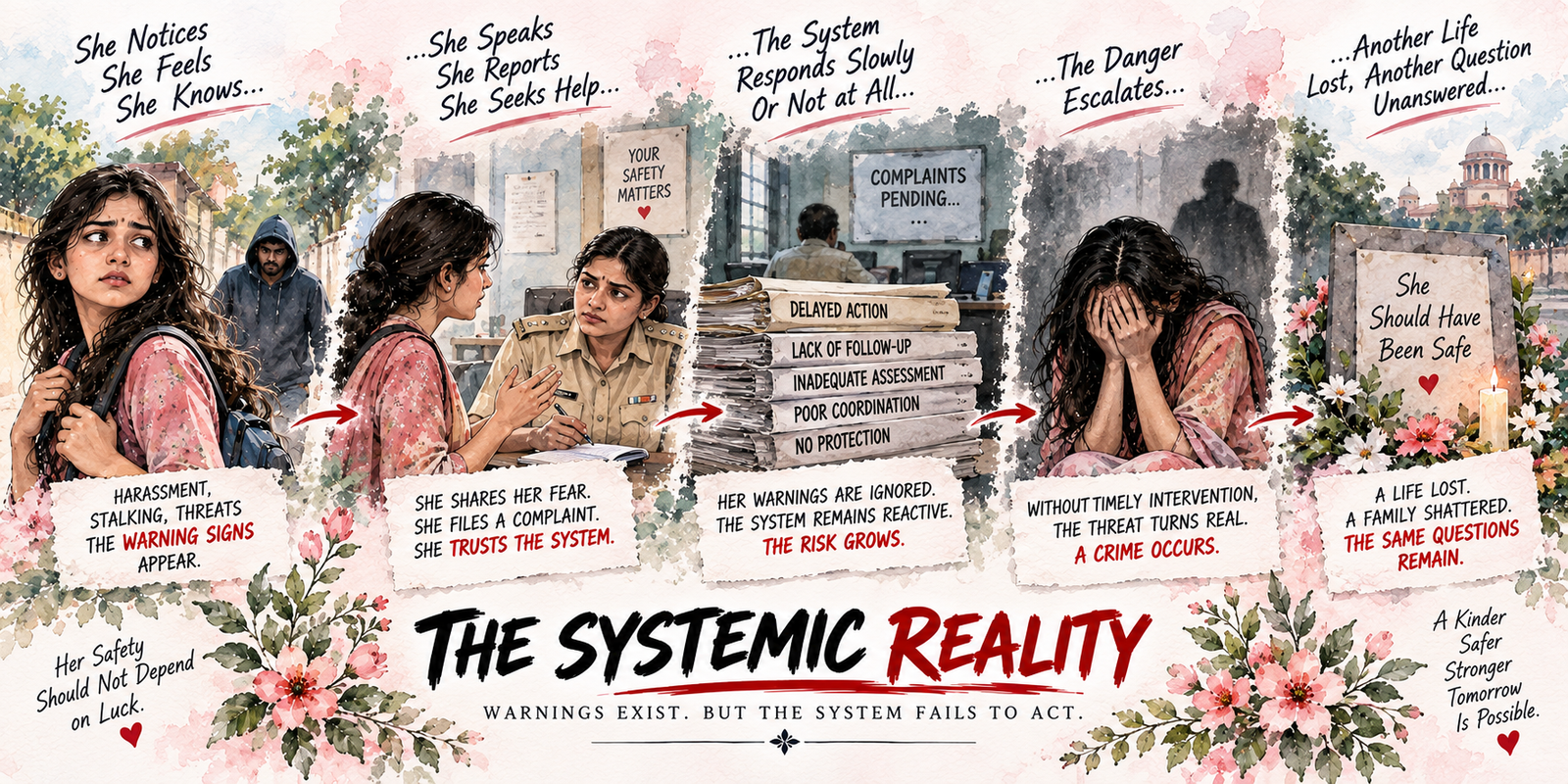
The challenge of proactive human security is not limited to individual incidents. It is also a systemic challenge involving administrative processes, limited police resources and the need for faster access to actionable information.
Infrastructure · Intelligence · Action
SECTION 01 · THE ADMINISTRATIVE CRISIS
The Administrative Crisis
The Reactive Nature of Law Enforcement
Law enforcement agencies in India frequently limit their response to post-incident investigations. The traditional First Information Report (FIR) system is inherently reactive, meaning it is designed to address a situation only after a crime has already been committed.
To save lives, there is a critical need to shift the focus from filing FIRs to generating Fast Action Reports (FAR), which allow for immediate, preemptive intervention.
FIR → FAR
From documenting what has already happened to creating a
mechanism for immediate action when a credible threat is
identified.
SECTION 02 · THE NUMBERS BEHIND THE DELAY
The Numbers Behind the Delay
A Strained and Understaffed Force
Compounding the administrative delays is India's critically low police-to-population ratio, which averages only 138 officers for every 100,000 people.
In certain states, such as West Bengal, this number drops even further to just 97.66 officers per lakh.
As a direct result of these systemic shortfalls, public trust in law enforcement is deeply fractured, with less than 25% of Indians expressing confidence in the police.
SECTION 03 · THE TECHNOLOGICAL IMPERATIVE
The Technological Imperative
Bridging the Gap with Smart Policing
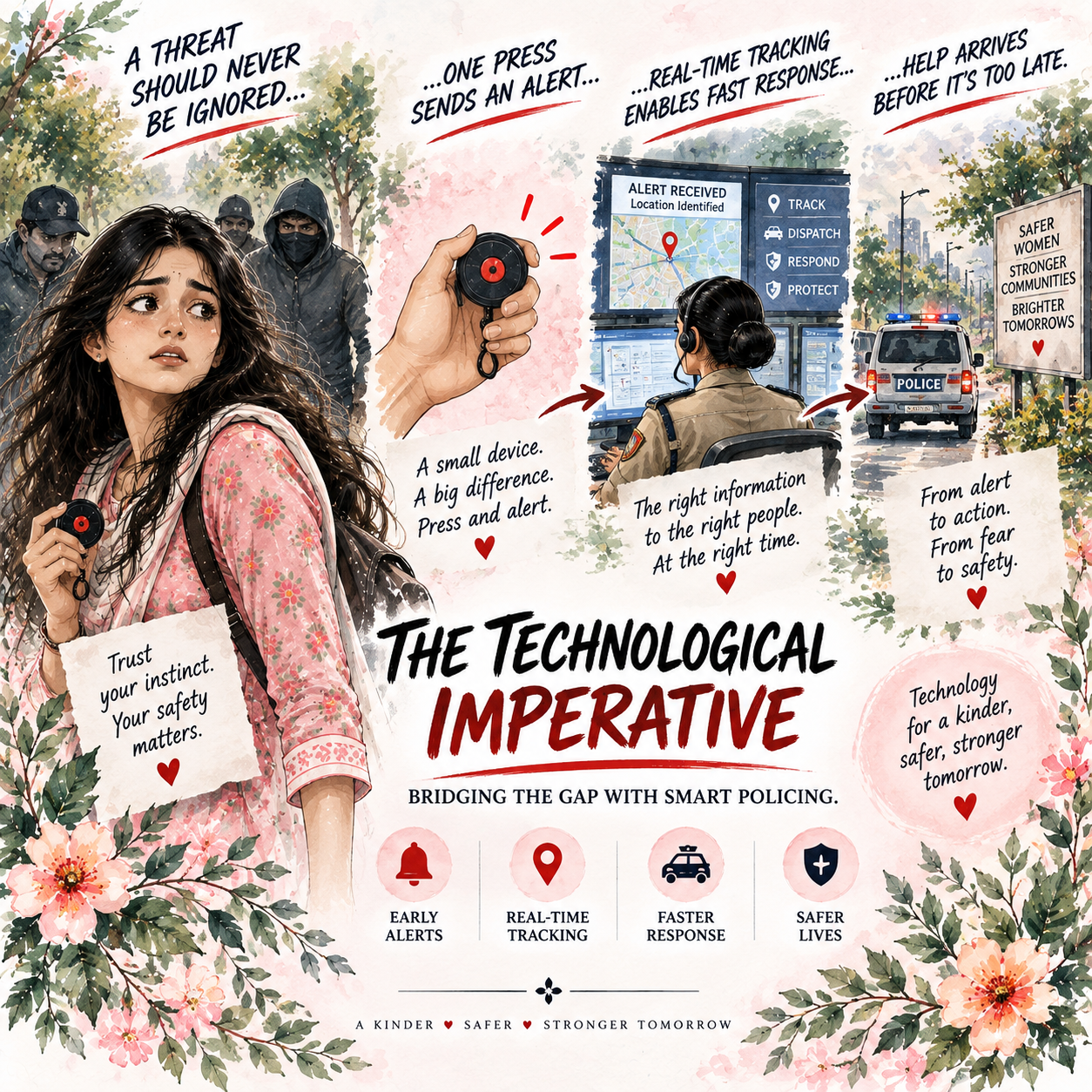
Due to this severe shortage of on-ground personnel, traditional manual policing is no longer sufficient to prevent fast-moving crimes.
Technological interventions are absolutely imperative to optimize the limited resources available to law enforcement.
The RL System provides this necessary digital infrastructure, drastically speeding up emergency responses and providing the real-time data needed to act before a tragedy occurs.
01
Optimize Limited Resources
Technology helps connect available personnel with the
information required to act quickly.
02
Accelerate Emergency Response
A digital alert chain can reduce the delay between a
person's emergency signal and police awareness.
03
Deliver Real-Time Information
Location and response data can provide officers with
actionable information during an emergency.
Data that enables action
THE RL RESPONSE
Turning Limited Resources into a Coordinated Response
The RL System is designed as a police-administered, hyper-local rescue management framework. It connects the threatened person, the RL Device, the RL Web Application, the police station and the responding RL Rakshak into one coordinated chain.
01
Threat is identified
02
SOS signal is transmitted
03
Police station receives alert
04
Officer responds using live information
FROM SYSTEMIC REALITY TO SYSTEMIC RESPONSE
Technology Cannot Replace Police. It Can Help Police Act Faster.
The RL System is intended to function as a specialized, hyper-local layer of preventive infrastructure — helping limited police resources receive actionable information quickly when an assessed threat becomes an emergency.